Plan for an ordinary bad day.
A bag disappears, a phone stops working, or an account locks during a trip. Those ordinary failures are enough to make travel difficult without also exposing long-term savings. A new passport does not change the technical permissions stored on a device, and a hardware wallet does not solve the loss of the identity documents needed to reach your next destination.
Divide the preparation into three practical jobs: proving identity and travel permission, paying for the trip, and recovering access if something fails. Then look for dependencies between them. If the passport copy, email login, payment wallet, and every recovery method are all on one phone, losing the phone creates several problems at once.
This is a planning exercise, not a universal custody design. The appropriate setup depends on the value involved, the journey, the devices, and who needs access. Avoid last-minute changes you do not understand. A familiar, tested arrangement with limited travel exposure is more useful than a complicated plan that only its designer can recover.
Give the trip a spending role, not a treasury role.
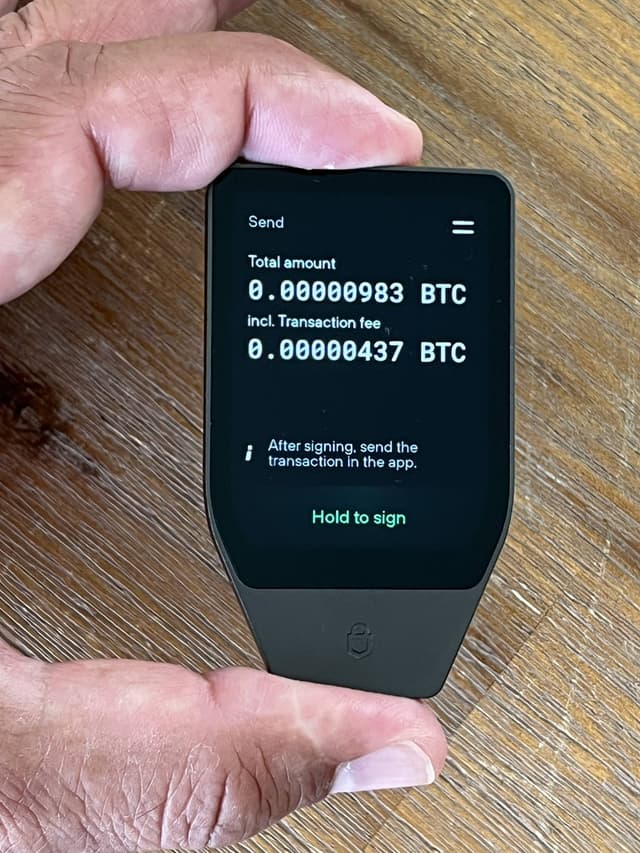
Decide what the journey actually requires: accommodation, local spending, an emergency reserve, and any expected larger payment. Bitcoin.org’s security guidance recommends keeping everyday amounts separate from savings held in a safer environment. The useful principle is proportionate access, not a fixed balance that suits every traveler.
Consider whether the traveling device needs authority over long-term holdings at all. A viewing application and a signing device serve different purposes. Viewing access can still reveal balances and transaction relationships, so it is not automatically privacy-preserving. Remove unnecessary exposure through deliberate preparation, not by assuming that an application without signing keys contains nothing sensitive.
Retain lawful practical alternatives for essential expenses. A merchant may not accept Bitcoin, a network may be unavailable or an account review may interrupt access. Check the actual services you intend to use and avoid making the entire trip depend on one provider. Separate a reliable spending plan from a large transaction that deserves its own preparation.
Keep wallet recovery out of the travel-document folder.
Recovery words are not another document to scan alongside a passport. They can provide control over the associated funds. Trezor’s guidance warns against sharing wallet backups or keeping digital copies, including photographs and email. Follow the current instructions for the actual wallet and backup method you use rather than improvising a recovery process from an unrelated product.
Do not put recovery words into a general cloud travel folder or send them to an advisor, hotel, immigration agent, or supposed support representative. A request for identity evidence and a request for signing secrets are fundamentally different. Stop and independently verify any message that tries to combine them.
A separate recovery location helps only if the arrangement remains recoverable and secure. Consider theft, damage, access by the wrong person, and access by the right person when it is genuinely needed. High-value or shared custody can justify specialist design and a carefully controlled recovery test. This article does not ask you to disclose or move any secret.
Check the account-recovery chain before departure.
Email, the password manager, the mobile number, and account authentication often form a circle. The email account may require a code from the lost phone, while restoring the phone number requires access to the email. Discover that dependency while you still have the original devices and time to use each provider’s legitimate recovery process.
The Cybersecurity and Infrastructure Security Agency (CISA) recommends multifactor authentication and stronger phishing-resistant methods where available. Apply suitable protections to the accounts that can reset other accounts, then establish how recovery works if the normal factor is unavailable. Stronger authentication should be paired with a recovery plan rather than treated as a reason to ignore one.
Keep software current and review unnecessary access before the trip. Confirm that emergency contacts can reach you through a known alternative. They should know the relevant process, not hold an unstructured collection of your passwords and wallet secrets. Do not test recovery by entering sensitive information into a website reached from an unsolicited message.
Protect identity records and respect border rules.
Keep appropriate protected copies of the identity and permission records needed for the journey, separate from the originals where practical. A copy can help explain the facts after a loss; it is not automatically a travel document or a substitute accepted by an airline or border authority. Confirm the relevant replacement and emergency-contact procedures in advance.
A second nationality does not place a traveler outside border law. Check the rules of departure, transit, and destination countries, including applicable document, and declaration requirements. US Customs and Border Protection publishes a policy on electronic-device searches. Other jurisdictions and individual circumstances require their own review; this article does not prescribe how to answer a lawful request.
Be truthful about nationality, residence, ownership, and the purpose of a transaction when the relevant process requires that information. Privacy preparation is not permission to conceal required disclosures or frustrate lawful inspection. For a sensitive journey, obtain advice from qualified counsel on the applicable rules before traveling rather than relying on a general online checklist.
Use a calm process when something changes.
An urgent message about a missed contribution, a replacement invoice, or an account suspension is harder to assess when you are tired and changing time zones. Use a known, independently verified contact channel before acting on changed payment instructions. Check the actual recipient, asset, network, and amount against the agreed obligation. Do not let urgency replace verification.
If a device or document is lost, establish what it could access and use the appropriate provider or authority process. Distinguish a missing phone from a disclosed wallet backup; they do not create the same exposure. Where signing material may be compromised, specialist help may be needed promptly, through a contact you verify independently. Never send secrets to someone who approaches you offering recovery.
After the trip, review temporary access, outstanding identity updates, and the records of any exceptional payment. A travel setup should remain understandable when you return. Bitcoin Lawyer can coordinate relevant cross-border planning questions within an agreed advisory scope; this is not a claim to operate a wallet-recovery service or guarantee a security outcome.
Rehearse the first hour after a phone is lost.
Imagine arriving in a foreign city without the phone used for reservations, messages, and authentication. The first task is ordinary access: contacting accommodation, reaching a trusted person, and establishing a secure way to communicate. The next task is identifying which accounts and devices may be exposed. Those tasks become harder if every contact and recovery instruction existed only on the missing phone.
Prepare a modest set of administrative information that can be reached through an appropriate independent method. It might identify the provider’s recovery process and a trusted contact without revealing passwords or wallet secrets. The method should fit your circumstances and be tested safely before departure. A recovery plan that depends on guessing an old login under pressure is not much of a plan.
The exercise should also distinguish loss from compromise. A phone protected by a working lock and a disclosed wallet backup are different incidents. Follow the relevant provider guidance and obtain verified specialist help where needed rather than treating every problem as a reason to enter recovery words into a new device immediately. Urgency is a reason for a prepared process, not a reason to trust the first person offering help.
Travel with enough information, not every historical document.
A particular journey may require a passport, visa or residence evidence, and selected supporting records. It rarely requires every company document and every old exchange export to be downloaded to the same device. Review the actual purpose of each locally stored file before leaving. Remove unnecessary copies through a deliberate process while preserving the authoritative records securely elsewhere.
This is also an organizational advantage. If a passport is lost, a clearly indexed copy and citizenship reference can help explain what needs replacing. A folder containing hundreds of unlabeled scans can slow the same task. Keep current and historical documents distinguishable, and remember that a useful copy does not become a substitute travel document.
For work involving confidential material, obtain jurisdiction-specific advice where appropriate before crossing a border. The article’s general security principles do not settle legal privilege, employer obligations, or a particular border authority’s powers. The lawful preparation is to understand the rules and carry what the trip requires, while retaining a coherent recovery arrangement.
A payment request deserves a separate decision.
A citizenship payment or a large business transfer should not be approved merely because it arrives during the trip and appears urgent. Compare the request with the agreed obligation. Confirm any changed recipient or instructions through a known channel that is independent of the unexpected message. An authentic-looking email chain can still contain a substituted payment instruction.
If the payment cannot safely be completed from the travel setup, use the agreed escalation process or change the timing where possible. Do not expose long-term signing authority simply to preserve an assumed convenience. The spending configuration chosen for a holiday should not silently become the treasury configuration for a major transfer.
Keep a record of what was authorized, what was actually sent, and what the recipient acknowledged. A transaction appearing on the network and the recipient crediting the correct obligation are related but separate facts. Reconcile the amount and reference after the payment instead of assuming that a broadcast transaction completed the administrative purpose.
Review the trip before the next departure.
After returning, consider what failed or nearly failed. Perhaps an account could not be recovered without a local telephone number, an important document was unavailable, or a temporary device retained unnecessary access. Address the specific weakness while the details are fresh rather than redesigning every part of the arrangement without a reason.
Close temporary permissions and retain the records needed for exceptional transactions or document replacements. If another person helped, confirm which access should continue and which should end. A useful travel-security plan evolves from actual dependencies while keeping its core purpose clear: identity, spending, and recovery should remain usable without making one lost item decisive.
Give the recovery plan a human owner.
If someone at home is part of your contingency plan, establish what they can actually do. They might hold a replacement-document contact list, know how to reach an advisor, or help arrange an ordinary payment. Do not assume that knowing where a recovery envelope sits means they understand how to use it safely. Their role should be limited, understood, and tested before departure.
Also establish a way to verify an urgent request from you. A lost phone can become an impersonation opportunity if a helper responds to any message claiming to be an emergency. Agree on a verification process that does not rely entirely on the device you might lose. The goal is reliable assistance without creating a convenient new route to the treasury.
The whole picture
The Bitcoin Lawyer take
Give the trip a spending budget and the traveler only the access that budget requires. Consider what would happen if a device were lost on the first day.
Rehearse recovery without sharing secrets with a hotel, advisor, or support desk. The people responsible should know whom to contact and what can safely be replaced.